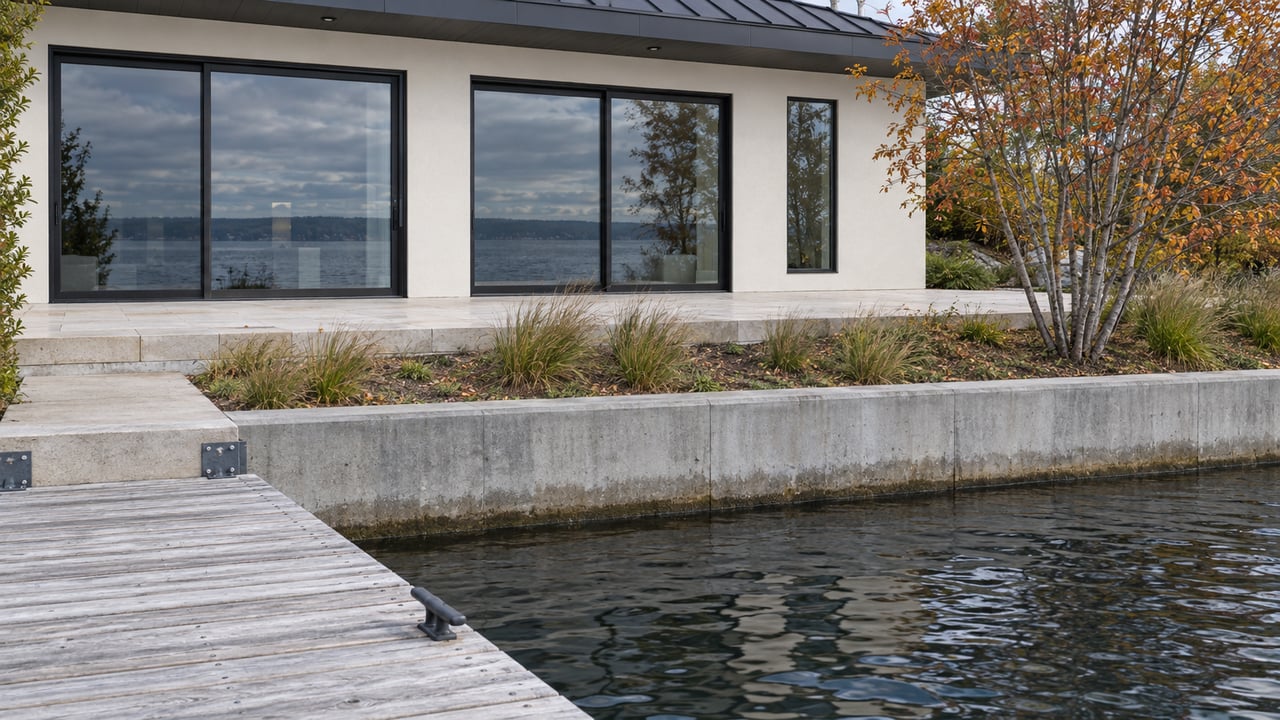
A buyer falls for a home on one of West Bloomfield's lakes. The water view sells the property before the agent finishes the walkthrough. An offer goes in, an inspector comes through, and everything about the house checks out. Then, days before closing, the deal slows down over something nobody put in writing: the dock exceeds its permitted length, or the buyer assumed a beach easement meant the same thing as owning the shoreline, and now there's a phone call to a lake association board that nobody scheduled for.
This is not a rare hiccup. It is close to a pattern in West Bloomfield, where a single township contains roughly 28 lakes and ponds according to the township's own Master Plan, and where the word "lakefront" on a listing sheet can legally mean three different things. The house passes inspection every time. The water rights are where West Bloomfield deals actually get tested.
Frontage, Access, and Privileges
West Bloomfield's lake inventory ranges from big public water like Cass Lake, an all-sports lake of roughly 1,280 acres with a state-run swim beach and boat launch at Dodge No. 4 State Park, to private, restricted-access water like Walnut Lake and Pine Lake, where the shoreline is quieter because fewer people have a legal right to use it. Somewhere in between sit dozens of subdivisions that were platted with shared beach lots or deeded dock associations instead of individual lake frontage.
That range means "on the water" can refer to different arrangements, so the listing description alone is not enough to establish what comes with a specific property.
Dingeman & Dancer, PLC explains that riparian rights in Michigan are appurtenant to the land itself, meaning they transfer automatically with a deed. A buyer who assumes their new home carries full frontage rights needs to confirm that before closing, not after moving in. The only way to know which rights apply to a specific address is to read the deed, the plat, and the association's governing documents, not the listing description.
The Inspection Stops at the Waterline
A standard home inspection in Michigan checks the roof, the furnace, the foundation, the electrical panel. It does not check the seawall, and it does not check whether the existing dock is legal.
That gap matters more in West Bloomfield than almost anywhere else in Oakland County, because seawall failure is expensive and slow to notice. A seawall that's leaning, cracked, or letting soil migrate behind it can look fine from the yard and still need full replacement, a project that commonly runs from $30,000 to $80,000 depending on length and material. Buyers who want that answered before closing need to bring in a marine contractor separately. It is a line item worth budgeting into any offer on lake frontage, the same way a buyer would budget for a roof nearing the end of its life.
The township's own code adds a layer that's easy to miss during a summer showing. West Bloomfield regulates seasonal docks under its local ordinance: a noncommercial seasonal dock that extends no more than 50 feet from the ordinary high water mark and doesn't block reasonable boat traffic can go in without a use permit. Anything longer, or anything intended as a permanent structure, needs township approval, and often a state review from Michigan's inland lakes and streams program as well. The same code sets an off-season storage window running from November 1 through March 31, and limits waterfront lots to one licensed, operable boat parked in the driveway during boating season. A dock that's been in place for twenty years may predate a rule change and may not conform to current limits, which becomes the buyer's problem the moment they take title.
Why the Township Gets a Say
The reason West Bloomfield can regulate something as specific as dock length traces back to a 1992 case: Hess v. West Bloomfield Township, in which the Michigan Supreme Court held that the state's Township Rural Zoning Act gives townships authority to regulate boat docking. The court's language was direct: riparian rights are property rights, but they're property rights a township can still zone around.
That ruling is the quiet legal backbone behind every dock ordinance in the township today. It's also why a lake homeowner can't assume that whatever their neighbor built, or whatever the previous owner built decades ago, is automatically compliant now. Township rules evolve. Grandfathered structures exist. The only way to know whether a specific dock, lift, or shoreline modification is currently permitted is to ask the building and zoning office directly, ideally before the inspection contingency expires.
The Assessment That Doesn't Show Up Until the Tax Bill
Several of West Bloomfield's lakes are managed by improvement boards that handle weed control and periodic dredging, and the cost of that maintenance can add to a buyer's carrying costs. A buyer comparing two similar lakefront homes on paper can end up with meaningfully different carrying costs once those costs are factored in. Pulling the full tax bill history, not just the current year's millage rate, is the only reliable way to see how carrying costs vary.
When the View Costs Less Than the Deed
Not every buyer needs full frontage to get real lake life. West Bloomfield's beach-lot and dock-association subdivisions, common around lakes like Middle Straits and Green Lake, offer an alternative to buying the shoreline parcel itself. It's a genuine value trade: the price tag sits closer to the township's broader housing stock than to the $800,000-and-up range that direct frontage on an all-sports lake like Pine or Orchard Lake typically commands. For a buyer who wants the lake lifestyle without the seawall maintenance and the dock permit paperwork that comes with owning the bottomland outright, that middle tier is worth a serious look before ruling it out as a compromise.
A Few Questions Worth Asking Early
What should I check if a dock is already there when I buy? Verify current permit status with the township before closing.
Is a lake association the same thing as my subdivision's HOA? No. A lake association governs the water, docks, and shared beach areas. A homeowners association governs the subdivision's land use and covenants. West Bloomfield treats these as fully separate, and a property can have one, both, or neither.
Can I add a dock if the home I'm buying doesn't have one? It depends on whether the lot carries deeded frontage, what the township's current ordinance allows, and whether state review applies for anything beyond a small seasonal structure. Confirm feasibility before writing a design plan or an offer contingent on it.
Lake property in West Bloomfield rewards patience more than speed. The house is rarely the complicated part of the transaction. The water is.
If you're weighing a lakefront purchase or sale in West Bloomfield and want someone who reads the deed, the dock permit, and the association bylaws before you write an offer, Deborah Gannes is a call away. Schedule a Free Consultation to start with the questions that actually decide the price.
This article is general information, not legal, tax or financial advice. Consult a qualified professional about your situation.